Single Wall vs Double Wall Cardboard Boxes: What Is the Difference?
What is single wall cardboard?
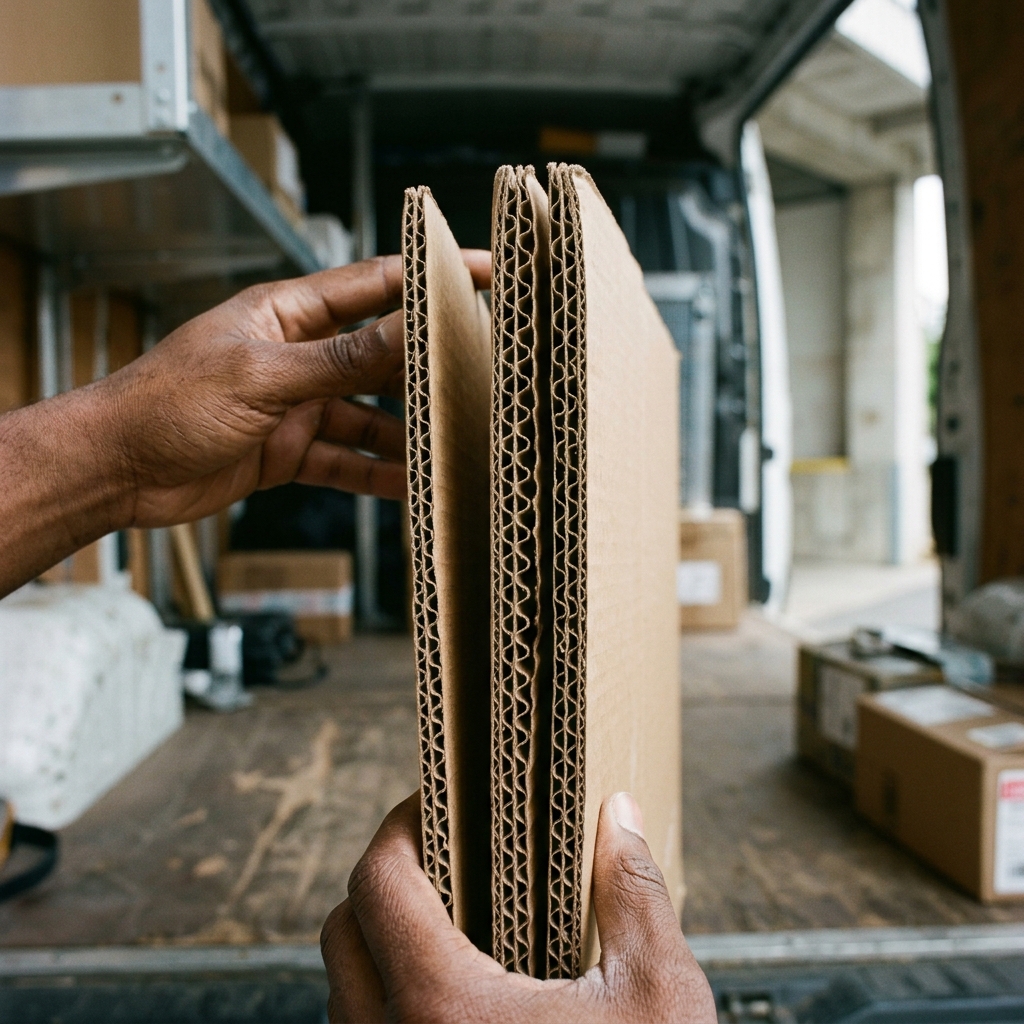
Single wall cardboard is made up of three layers: a fluted (wavy) sheet of paper sandwiched between two flat liner sheets. This construction gives it a good balance of rigidity and light weight. It is the most common type of corrugated cardboard used in everyday packaging, from online retail deliveries to moving boxes.
- Total thickness is typically around 3 mm to 4 mm.
- Suitable for lighter items, usually up to around 25 kg, though this varies by box size and flute type.
- Lighter and less bulky than double wall, so it costs less to produce and ship.
What is double wall cardboard?
Double wall cardboard adds a second fluted layer and an extra liner sheet, giving it five layers in total. That extra layer makes a real difference to strength and rigidity. It is widely used for heavier goods, fragile items, and anything that needs to withstand stacking pressure or a longer journey.
- Total thickness is typically around 6 mm to 7 mm.
- Handles heavier loads, often up to around 40 kg or more depending on construction.
- More resistant to crushing, puncture, and moisture than single wall.
How do single wall and double wall boxes compare side by side?
The table below gives a straightforward comparison of the two constructions across the factors that matter most when choosing a box.
| Factor | Single Wall | Double Wall |
|---|---|---|
| Number of layers | 3 | 5 |
| Typical thickness | 3, 4 mm | 6, 7 mm |
| Typical weight capacity | Up to ~25 kg | Up to ~40 kg+ |
| Crush resistance | Moderate | High |
| Cost | Lower | Higher |
| Weight of box itself | Lighter | Heavier |
| Best use | General retail, light goods, e-commerce | Heavy, fragile, or high-value items |
What do the flute types mean?
The wavy inner layer of corrugated cardboard is called the flute, and it comes in different sizes, labelled with letters. The flute size affects how strong and rigid the board is.
- A flute: The tallest flute, offering the best cushioning and stacking strength.
- B flute: Shorter and denser, giving a flat, printable surface and good puncture resistance.
- C flute: The most widely used, sitting between A and B in terms of height and strength.
- E flute: Very thin and smooth, often used for retail boxes and branded packaging.
Double wall boxes often combine two different flute types, for example B and C together, to balance cushioning with rigidity. You may see this written as "BC flute" on a product specification.
Which is stronger, single wall or double wall?
Double wall is stronger in almost every measurable way. It has higher compression strength, meaning it resists being crushed under stacked boxes better than single wall. It also absorbs impacts more effectively, which matters when parcels are handled roughly in transit. For heavy or fragile contents, that extra layer gives meaningful additional protection.
When should you use single wall boxes?
Single wall boxes are the right choice for the majority of everyday packaging tasks. They are lighter, cheaper, and perfectly adequate for most goods shipped within the UK.
- Light to medium weight items such as clothing, books, and small consumer goods.
- Short or standard delivery routes with relatively careful handling.
- Situations where keeping postage costs low matters, since a lighter box reduces shipping weight.
- Storage of documents, stationery, or other lightweight contents.
When should you use double wall boxes?
Double wall boxes are worth the extra cost when the contents are heavy, fragile, or high in value, or when boxes need to be stacked for storage or transit.
- Heavy items such as tools, equipment, or dense goods approaching or exceeding 20 kg.
- Fragile items like glass, ceramics, or electronics that need extra cushioning.
- Long-distance or international shipping, where parcels go through more handling.
- Warehouse storage where boxes will be stacked several high.
- Goods that may be exposed to damp conditions, since the extra layers offer slightly better moisture resistance.
Does the type of cardboard affect sustainability?
Both single wall and double wall corrugated cardboard are widely recyclable through standard UK kerbside collections. Recycle Now, the UK's national recycling campaign, confirms that corrugated cardboard is one of the most recycled materials in the country. Double wall uses more raw material per box, so it has a slightly higher material footprint, but it also provides greater protection, which can reduce the need for additional internal packaging such as bubble wrap or foam. The right box for the job tends to be the more efficient choice overall.
How do you choose the right wall thickness for your box?
Start with the weight of your contents and work from there. As a general rule, if your item is under 20 kg, not fragile, and not going through an unusually long supply chain, single wall will do the job. If it is heavy, fragile, or needs to survive lots of handling, double wall is the safer option. It is also worth checking with your courier, as some carriers have minimum packaging standards for certain item weights or categories.