Single Wall vs Double Wall Cardboard Boxes: Which Do You Need?
The short answer
Single wall boxes suit most parcels going through the post. They hold clothing, books, cosmetics, small electronics and the majority of stock items an online seller ships every day. Double wall boxes come out when the contents are heavy, fragile, or the box is large enough that the walls would otherwise bow.
If you sell through Royal Mail, Evri or Amazon FBA and your parcels weigh under about 15kg, single wall is almost always the right call. Reach for double wall when you cross that weight, when you stack pallets, or when a single wall box has already failed you.
What the terms actually mean
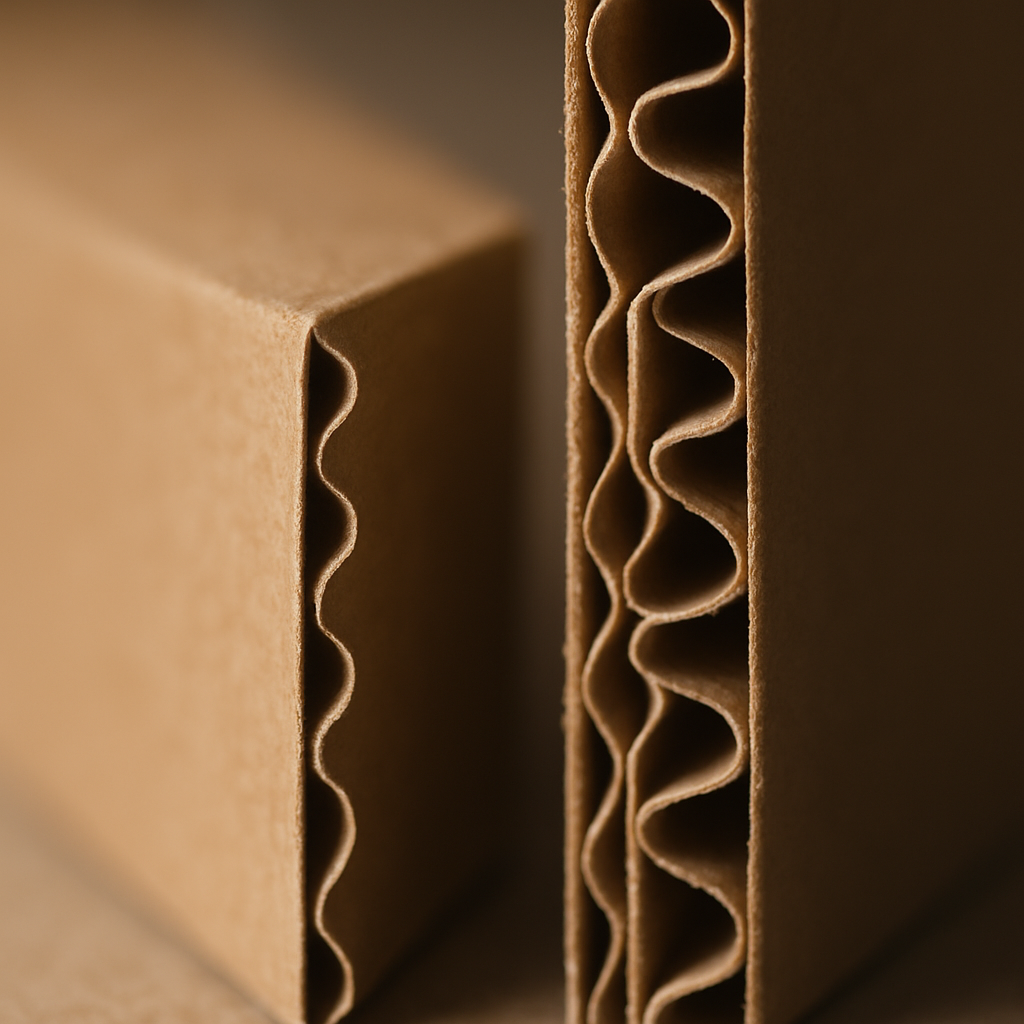
Corrugated board is made of a fluted (wavy) layer glued between flat liners. The flute is what gives the board its rigidity.
- Single wall: one fluted layer between two liners. One layer of cushioning, one layer of strength.
- Double wall: two fluted layers between three liners. Noticeably stiffer, heavier, and better at resisting crushing and puncture.
There is also triple wall, but that is industrial territory for very heavy goods and export crates. Most sellers never touch it.
Board grade matters more than the label
"Single wall" alone does not tell you how strong a box is. The flute profile and the board weight both count.
Common flute profiles you will see quoted:
- B flute: thin, around 3mm. Good print surface, decent stacking strength, common for retail and smaller parcels.
- C flute: around 4mm. More cushioning than B, the workhorse for shipping boxes.
- BC flute: a double wall combination, roughly 7mm, strong and forgiving.
When you compare boxes by size on the site, check the board grade alongside the price. A cheap single wall box in a light grade is not the same product as a heavier single wall box, even at the same dimensions.
Weight and content rules of thumb
These are working guidelines, not laboratory limits. Actual burst strength depends on grade, box size and how well you pack.
- Up to 5kg, non-fragile: single wall, B or C flute. Books, apparel, homeware.
- 5kg to 15kg: single wall in a heavier C flute, or double wall if the box is large or the contents shift.
- Over 15kg, or fragile and heavy: double wall. Ceramics, glassware, machined parts, bottled liquids.
- Long or wide boxes over 600mm: consider double wall even at moderate weight, because large single wall panels flex and invite crushing in transit.
Cost and the false economy
Double wall costs more per box, uses more material and adds weight, which can nudge you into a higher carrier price band. That is real money on volume. Buying double wall "to be safe" across your whole range is usually waste.
The opposite mistake is worse. A single wall box that arrives crushed means a replacement, a return, a refund and often a lost customer. One damaged high-value order can cost more than a whole pallet of the correct box.
The right approach is to match the box to the product. Run your light, robust lines in single wall. Upgrade only the SKUs that are heavy, fragile or awkwardly large.
Quick decision checklist
- Is the item under 5kg and not fragile? Single wall.
- Is it fragile and heavy, or over 15kg? Double wall.
- Is the box longer than 600mm on any side? Lean double wall.
- Are you stacking on pallets for storage or freight? Double wall for the outer cases.
- Not sure? Order a small quantity of each, pack a real order, and drop it from waist height onto a hard floor. The board that survives is your answer.
Comparing prices
Board grade, flute and quantity all move the price, so two boxes at the same size can differ a lot. You can compare live prices across UK suppliers by size on Packaging Marketplace, which makes it easier to see when a double wall upgrade is a few pence versus a real jump, and to buy the correct spec without overpaying.