How to Save on Packaging: Practical Ways to Cut Costs Without Cutting Corners
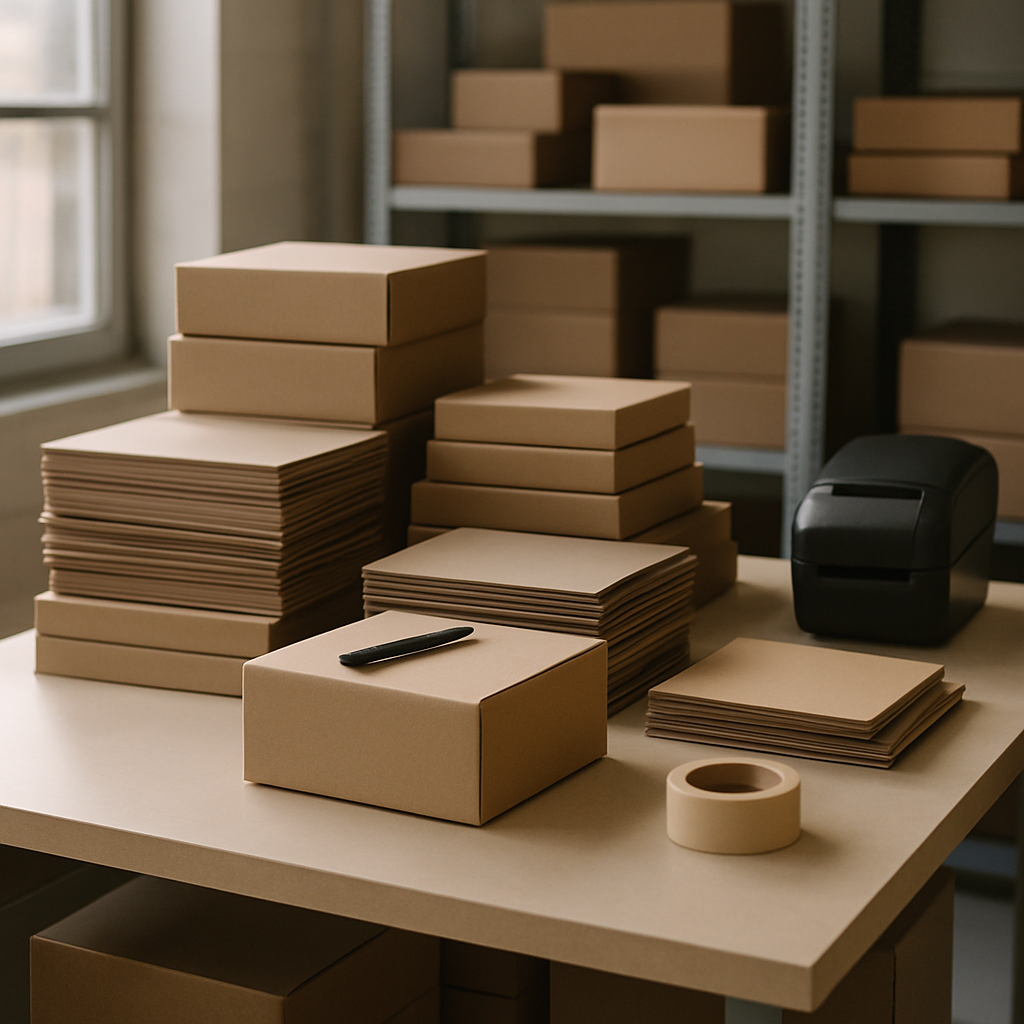
Why does packaging cost so much in the first place?
Packaging costs are driven by several factors working at once. Raw material prices, fuel surcharges on delivery, minimum order quantities, and the sheer variety of sizes and formats all add up. For small businesses especially, buying the wrong size or format in the wrong quantity is often the biggest source of waste.
What is the single most effective way to save on packaging?
Right-sizing your packaging is the most reliable way to reduce costs. When a box is too large for its contents, you pay for void fill, extra cardboard, and heavier shipping. A snug fit cuts material use and can meaningfully reduce courier charges, since many UK carriers price parcels by dimensional weight as well as actual weight.
- Measure your most common products before ordering boxes, not after.
- Aim for no more than 3 to 5 cm of clearance on each side if you need any protective cushioning.
- If you ship a range of product sizes, two or three well-chosen box sizes will serve you better than a single compromise size.
Does buying in bulk actually save money?
Buying in larger quantities almost always reduces the unit price, but only if you have reliable storage and consistent demand. Ordering 1,000 boxes when you ship 20 a month ties up cash and warehouse space for years. A better approach is to estimate three to six months of realistic usage and order to that number. Reassess each time you reorder as your volumes change.
How can choosing the right material reduce packaging spend?
Different materials carry very different price points, and the most expensive option is not always the most suitable one. Corrugated cardboard, for example, offers strong protection for a relatively low cost per unit. Rigid plastic or premium rigid boxes cost more and may be unnecessary for everyday shipments.
| Material | Typical use case | Relative cost |
|---|---|---|
| Single-wall corrugated cardboard | Light to medium goods | Low |
| Double-wall corrugated cardboard | Heavier or fragile items | Low to medium |
| Postal boxes and mailer tubes | Documents, posters, small products | Low |
| Rigid gift boxes | Premium retail presentation | High |
| Poly mailers | Non-fragile soft goods | Very low |
Matching the material to the actual protection requirement, rather than defaulting to a premium option, is a straightforward way to bring costs down.
Can reducing void fill lower my overall costs?
Yes, significantly. Void fill such as bubble wrap, foam peanuts, and air pillows adds cost at every stage: buying it, packing with it, and the extra parcel weight it sometimes creates. If you right-size your boxes first, you need far less void fill to begin with. Where some protection is still needed, recycled paper void fill is often cheaper than foam alternatives and is accepted in household recycling in many UK areas.
Is it worth switching to own-brand or plain packaging?
For many businesses and consumers, plain or unbranded packaging is perfectly adequate and costs considerably less than custom-printed options. Custom printing adds value when it genuinely supports the customer experience or brand perception, but if your products go straight into a storage room or a workshop, branded packaging is spending money with no return. Starting plain and adding branding later, once volume justifies the minimum print runs, is a sensible sequence.
What about packaging waste, and does reducing it save money too?
Reducing packaging waste and reducing packaging spend tend to go hand in hand. Using less material means buying less material. In the UK, businesses that produce or handle significant amounts of packaging may also have obligations under the Packaging Producer Responsibilities regulations administered by the Environment Agency. Using less packaging can reduce the weight you need to report and any associated compliance costs.
- Avoid over-packaging items that do not need heavy protection.
- Consider packaging formats that are easier for recipients to recycle, which can also be a selling point.
- Review your returns packaging: reusable or resealable designs can lower the cost of processing returns.
Are there any quick wins for someone who just wants to spend less today?
A few simple changes can have an immediate effect without any long-term commitment.
- Switch from boxes to padded mailers or poly mailers for any non-fragile, non-rigid products. They are lighter and cheaper to post.
- Reuse incoming packaging for outgoing shipments where its condition allows. This is common practice in small businesses and costs nothing.
- Check whether your current supplier offers a loyalty discount or volume price break you have not yet claimed.
- Consolidate orders. Placing one larger order rather than several small ones reduces delivery charges and sometimes unlocks a lower unit price.
- Audit what you currently hold in stock. Packaging that sits unused for more than six months may represent a format you no longer need.
Should I ever spend more on packaging to save money overall?
Sometimes, yes. Better-quality packaging that protects products reliably can reduce damage rates, which cuts the cost of replacements, refunds, and customer service time. This is particularly relevant for fragile, high-value, or perishable goods. The maths are worth doing: if one in twenty parcels arrives damaged with cheap packaging, but one in two hundred arrives damaged with a sturdier option, the cost difference may favour spending more per unit.