How Many Boxes Do I Need to Move House? A Guide by Bedroom Count
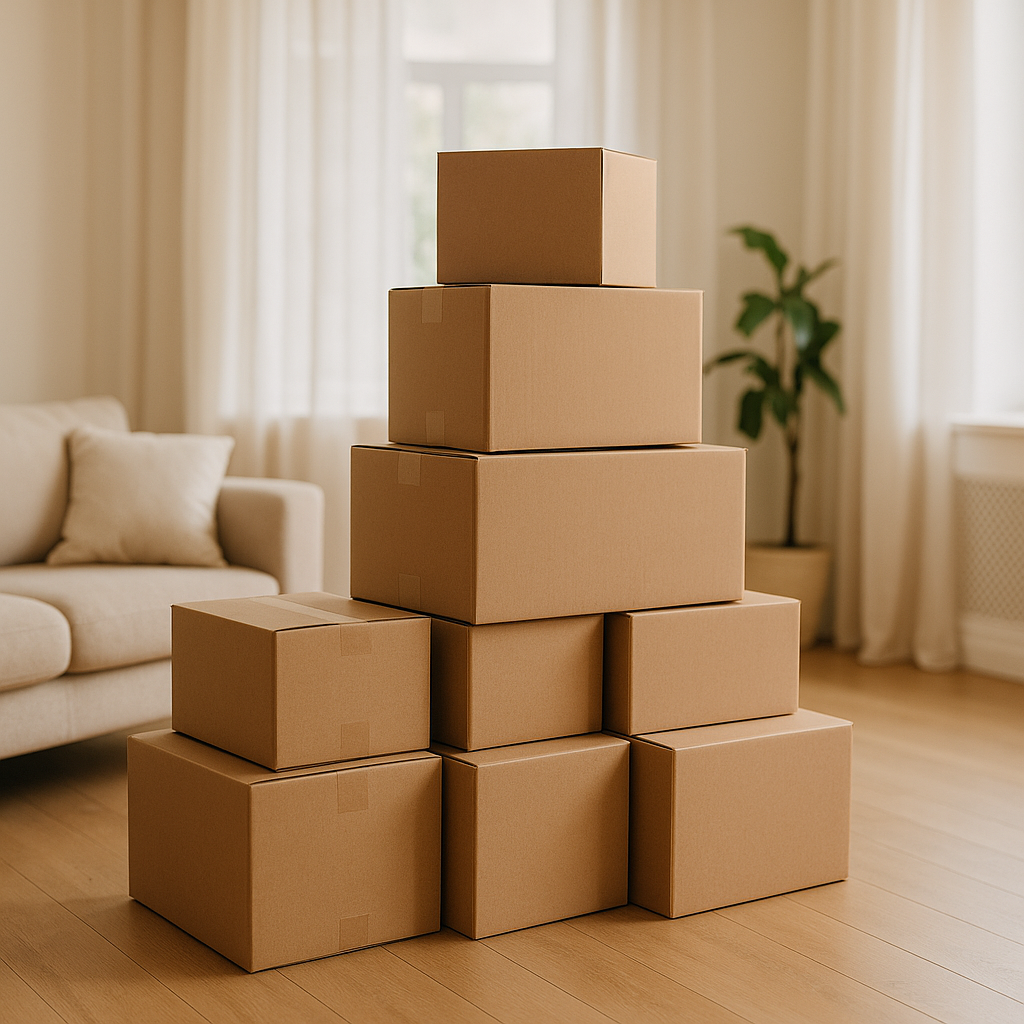
How many boxes do you actually need to move house?
Most people underestimate the number of boxes they need, sometimes by half. A general rule of thumb used by removal companies is to allow around 10 small boxes, 10 medium boxes, and 5 large boxes per bedroom. That is a starting point, not a fixed rule. The real number depends on how much stuff you have, how long you have lived there, and how ruthlessly you declutter before packing.
The estimates below are based on averages for a furnished home. If you are a minimalist or you have already had a clear-out, you will likely need fewer. If you have a full loft, a garage, or decades of accumulated belongings, add more.
How many boxes do I need for a studio or one-bedroom flat?
A studio or one-bedroom flat typically needs between 20 and 40 boxes in total. Here is a rough breakdown:
- Small boxes (books, heavy items): 8 to 10
- Medium boxes (kitchen items, clothes, general household): 8 to 12
- Large boxes (bedding, pillows, lampshades, lightweight bulky items): 4 to 8
- Wardrobe boxes (hanging clothes): 1 to 2
A kitchen is often the most box-hungry room in any home, even a small one. Crockery, glassware, and pantry items add up quickly. Set aside at least 5 to 8 boxes for the kitchen alone, regardless of property size.
How many boxes do I need for a two-bedroom home?
A two-bedroom house or flat usually needs between 40 and 60 boxes. The second bedroom adds more than you might expect, particularly if it doubles as a home office or storage room.
- Small boxes: 15 to 20
- Medium boxes: 15 to 20
- Large boxes: 8 to 12
- Wardrobe boxes: 2 to 3
If you have a home office, budget an extra 5 to 10 boxes for books, files, cables, and equipment.
How many boxes do I need for a three-bedroom home?
Three-bedroom homes are the most common property type in the UK, according to ONS housing data. They typically need between 60 and 80 boxes.
- Small boxes: 20 to 25
- Medium boxes: 20 to 25
- Large boxes: 12 to 18
- Wardrobe boxes: 3 to 4
At this size, extra storage spaces such as an airing cupboard, garage, or shed start to matter a lot. Add 10 to 15 boxes if you have any of those.
How many boxes do I need for a four-bedroom home?
A four-bedroom home can require anywhere from 80 to 120 boxes, sometimes more. Families who have lived in a property for several years will likely be at the higher end of that range.
- Small boxes: 25 to 35
- Medium boxes: 25 to 35
- Large boxes: 18 to 25
- Wardrobe boxes: 4 to 6
At this point, specialist containers such as dish packs and mattress bags become worth considering, both for protection and for making packing more efficient.
Quick reference: boxes by bedroom count
| Property size | Estimated total boxes | Small | Medium | Large | Wardrobe boxes |
|---|---|---|---|---|---|
| Studio / 1 bedroom | 20 to 40 | 8 to 10 | 8 to 12 | 4 to 8 | 1 to 2 |
| 2 bedrooms | 40 to 60 | 15 to 20 | 15 to 20 | 8 to 12 | 2 to 3 |
| 3 bedrooms | 60 to 80 | 20 to 25 | 20 to 25 | 12 to 18 | 3 to 4 |
| 4 bedrooms | 80 to 120 | 25 to 35 | 25 to 35 | 18 to 25 | 4 to 6 |
What else affects how many boxes you need?
The number of bedrooms is a useful starting point, but several other factors can push the total up or down significantly.
- How long you have lived there. Belongings accumulate over time. Someone who has lived in a three-bedroom home for 15 years will almost certainly need more boxes than someone who moved in two years ago.
- Whether you declutter first. Donating, selling, or recycling unwanted items before you start packing is the single most effective way to reduce your box count. Charities such as the British Heart Foundation accept furniture and household goods donations.
- Garage, loft, or shed storage. These spaces are easy to forget and are often packed with items that need their own boxes.
- A home office. Books, files, and tech equipment are heavy and need small, sturdy boxes. Allow more than you think.
- Children's rooms. Toys, craft supplies, and sports equipment take up a surprising amount of space.
Should you buy new boxes or try to find free ones?
Free boxes from supermarkets or online marketplaces can work, but they come with trade-offs. Used boxes may be damp, weakened, or too varied in size to stack efficiently in a removal van. Uniform, purpose-made moving boxes stack more safely and are easier for removal teams to handle. If you are using a professional removal company, most will advise using consistent box sizes to protect your belongings and make loading faster.
That said, free boxes are perfectly adequate for lightweight, non-fragile items such as cushions, soft toys, or linens where structural strength is less critical.
What packing materials do you need alongside boxes?
Boxes are only part of the picture. You will also need:
- Packing tape and a dispenser (budget more than you think)
- Bubble wrap or packing paper for fragile items
- Tissue paper or newsprint for glassware and crockery
- Markers for labelling
- Mattress bags and sofa covers for large furniture
- Stretch wrap for keeping drawers shut and protecting upholstery
Any tips for packing boxes efficiently?
Efficient packing saves boxes and makes unpacking much less stressful.
- Pack room by room and label every box clearly with its contents and destination room.
- Fill boxes fully. Half-empty boxes collapse under weight when stacked.
- Put heavy items at the bottom of each box and lighter items on top.
- Use clothes, towels, and linens as padding around fragile items to save on bubble wrap.
- Set aside an "open first" box with essentials for your first night: kettle, mugs, phone charger, toilet roll, and a change of clothes.