Free and Cheap Moving Boxes in the UK: Where to Actually Find Them
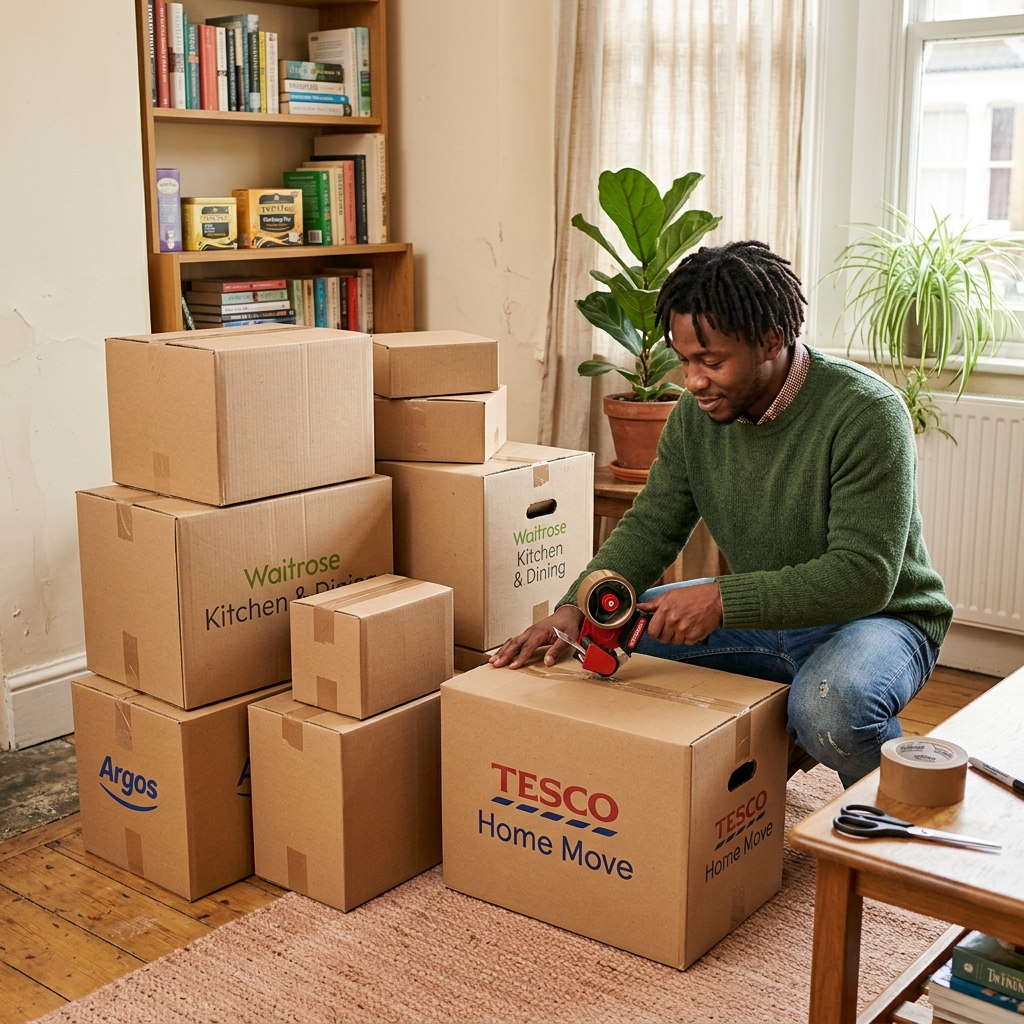
Why bother hunting for free boxes?
Moving house is one of the most expensive things you can do in the UK. According to the Which? cost of moving guide, the average cost of moving home in the UK runs into thousands of pounds once you factor in solicitor fees, removals, and deposits. Cutting your box budget, even by a modest amount, is one of the few costs you can genuinely control.
Boxes are also one of the most wasteful parts of a move. Finding secondhand ones keeps them out of landfill and saves you money at the same time.
Where can you get free moving boxes in the UK?
Several reliable sources exist for free boxes, and most of them are within easy reach wherever you live.
Online marketplaces and local community groups
Freecycle and Facebook Marketplace are two of the most consistent sources of free moving boxes. People who have just moved are often desperate to get rid of boxes quickly, and they will hand them over for nothing if you can collect.
- Freecycle: A free network where people give away unwanted items locally. Search for "boxes" or "moving boxes" in your area at freecycle.org.
- Facebook Marketplace and local Facebook groups: Search "free boxes" or "moving boxes" in your nearest town or city group. New listings appear almost daily.
- Nextdoor: A neighbourhood app where people post free items for nearby residents. Useful if you want boxes from very close by.
- Gumtree: Filter by "free" in the household category. Quality varies, but it is worth a regular check in the weeks before your move.
Supermarkets and off-licences
Supermarkets receive deliveries every day, so they have a constant supply of cardboard boxes. Most are happy to give them away rather than break them down for recycling.
- Go in person and speak to someone in the stock room or customer services. Do not just ask at the till.
- Off-licences and wine shops are especially good sources. Bottle boxes are double-walled and very sturdy, which makes them ideal for heavy items like books.
- Larger stores (such as big Tesco or Sainsbury's branches) tend to have more boxes than smaller ones.
- Timing matters. Go early in the morning, just after a delivery, or ask staff what days deliveries arrive.
Bookshops and libraries
Bookshops receive regular stock deliveries in solid, uniform-sized boxes. Libraries sometimes have them too. Because books are heavy, these boxes are built to handle weight, which makes them better than most for dense or awkward items.
Office supply and print shops
Paper is delivered in bulk to offices, print shops, and copy centres in very sturdy boxes. These are often a consistent size, which makes stacking easier. Ask the manager if they set aside boxes for collection.
Ask your removal company
Some removal companies will lend or include boxes as part of their service. It is always worth asking when you get a quote. Companies that run a packing service often have a surplus of used boxes they are willing to pass on.
Where can you buy cheap moving boxes in the UK?
Sometimes free is not realistic, especially if you need a large number of uniform boxes quickly. Buying in bulk is usually cheaper per box than buying individually.
| Source | Typical price range | Best for |
|---|---|---|
| Online packaging suppliers (bought in bulk) | From around 50p to £1.50 per box | Large moves, consistent sizing |
| Removal company starter packs | Varies, often £20 to £50 for a bundle | Full-service moves, convenience |
| eBay (used boxes, job lots) | Often free to a few pounds per lot | Budget moves, flexible timing |
| B&Q and DIY stores | Around £1 to £3 per box | Last-minute purchases, easy access |
| Discount stores (e.g. Home Bargains, B&M) | Around 50p to £1 per box | Small moves, tight budgets |
Buying new boxes in bulk from a packaging supplier tends to give you the best combination of price, strength, and consistency. If you are moving a large household, mismatched free boxes can slow you down and make stacking in a van much harder.
What should you watch out for with secondhand boxes?
Free boxes are great, but not all of them are safe to use for moving.
- Damp or soft cardboard: Boxes that have been stored in a garage or shed may have absorbed moisture. They can collapse under weight, which risks damaging your belongings.
- Pest risk: Cardboard can harbour insects, including silverfish and cockroaches. Check boxes carefully before bringing them into your home.
- Food residue: Avoid boxes that previously held fresh food. They can attract pests and may smell.
- Weak bases: Press the bottom of each box before you pack it. If it flexes a lot, reinforce it with packing tape or do not use it for heavier items.
How many moving boxes do you actually need?
It depends on the size of your home, but there are rough guidelines that are widely used in the removals industry.
- Studio or one-bedroom flat: 15 to 25 boxes
- Two-bedroom home: 30 to 50 boxes
- Three-bedroom home: 50 to 70 boxes
- Four or more bedrooms: 70 to 100 or more boxes
These are starting points, not guarantees. If you have a lot of books, clothes, or kitchen equipment, you will likely need more. It is generally better to have a few too many than to run out mid-pack.
Should you mix free and bought boxes?
Yes, and most people do. A sensible approach is to use sturdy bought boxes for heavy or fragile items (books, crockery, electronics) and free or secondhand boxes for soft goods like bedding, towels, and clothes. This keeps costs down without compromising the safety of your most valuable items.