Cheap Moving Boxes UK: How to Buy Them Without Overspending
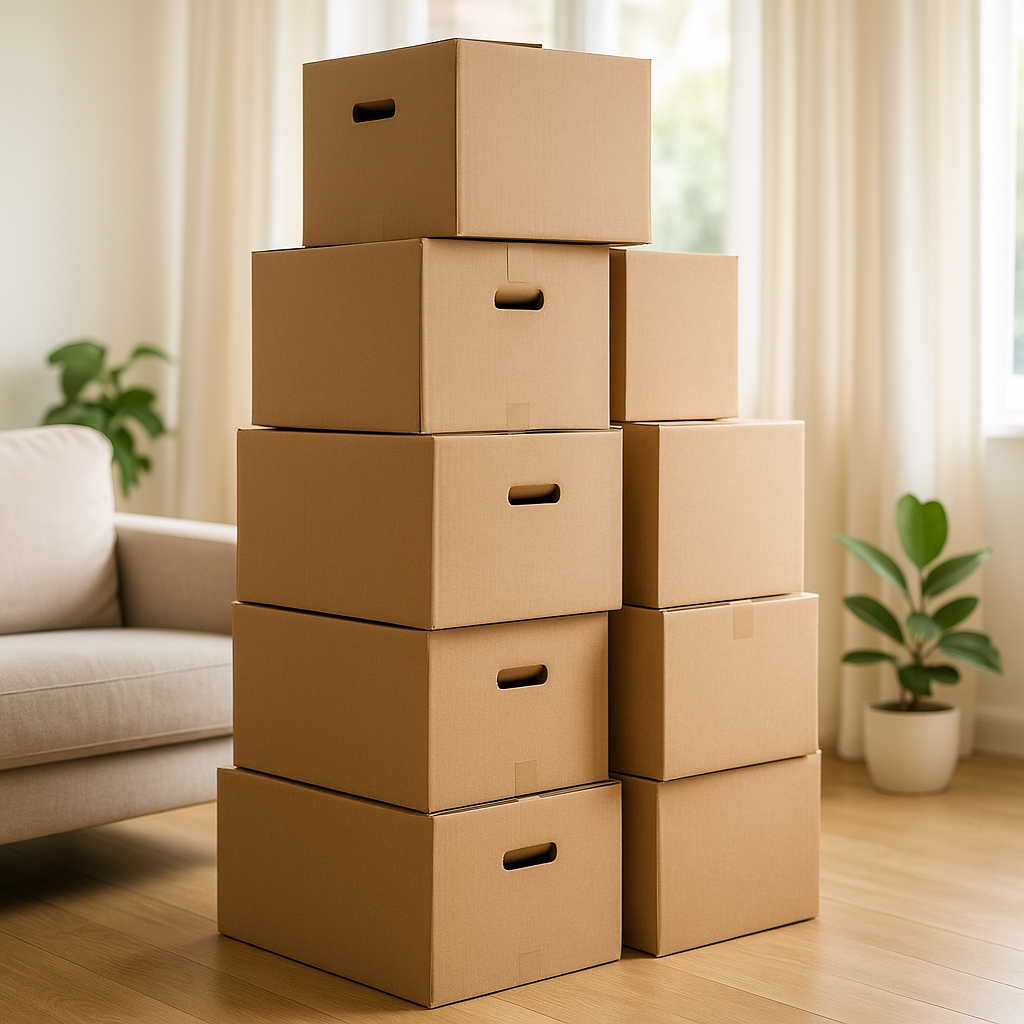
Why do moving boxes cost so much, and can you actually save?
Moving boxes can feel expensive when you add them up, but the good news is that buying smartly can cut the cost significantly. The key is knowing where to look, what sizes you actually need, and whether new or secondhand boxes are right for your move.
This guide covers both paid and free options, so you can make a practical decision based on your timeline and budget.
What types of moving boxes do you need?
Most house moves need a mix of box sizes rather than one size in bulk. Using the right size for each type of item protects your belongings and makes loading a van much easier.
- Small boxes are best for heavy items such as books, tins, and tools. A small box packed with books stays liftable; a large one does not.
- Medium boxes suit kitchen items, toys, and everyday appliances.
- Large boxes are good for lightweight but bulky things such as duvets, cushions, and lampshades.
- Wardrobe boxes have a hanging rail inside and keep clothes crease-free during transit.
- Dish packs have double-walled sides and are designed specifically for crockery and glassware.
A rough rule of thumb used by many removal companies is to budget for roughly ten boxes per room, though this varies widely depending on how much you own.
Where can you buy cheap moving boxes in the UK?
Buying new boxes from a dedicated packaging supplier is often more affordable than people expect, especially when you buy a bundle or kit rather than individual boxes.
- Online packaging suppliers sell ready-made moving kits that bundle boxes, tape, and packing paper together. Buying a kit almost always works out cheaper per box than buying separately.
- Supermarkets and DIY stores sometimes sell basic cardboard boxes, though the range is limited and the price per box can be higher than online.
- Removal companies often sell boxes as part of a broader moving package, which can be convenient if you are already hiring them.
When comparing prices, check the box grade. Single-wall boxes are fine for lighter items. Double-wall boxes cost a little more but are worth it for heavier or fragile contents.
How can you get moving boxes for free?
Free boxes are widely available in the UK, though they take more effort to source and may not always be the right size or condition.
- Supermarkets receive large deliveries daily and often have spare boxes available. Ask at the customer service desk, ideally early in the morning before boxes are broken down.
- Local Facebook groups and Nextdoor regularly have people giving away boxes after a recent move. Search for your area and post a request.
- Freecycle is a free platform specifically for giving away unwanted items, and moving boxes appear on it frequently.
- Offices and workplaces receive regular deliveries and often have uniform-sized boxes going spare.
- Bookshops and off-licences tend to have sturdy, well-sized boxes from their stock deliveries.
The main drawback of free boxes is that you cannot guarantee their condition. Check each one for damp patches, soft corners, or signs of pest contamination before using it to pack anything valuable.
New boxes vs free secondhand boxes: which is better?
The honest answer is that it depends on your circumstances. Here is a straightforward comparison.
| Factor | New boxes | Free/secondhand boxes |
|---|---|---|
| Cost | Low to moderate per box in bulk | Free |
| Reliability | Consistent strength and size | Variable condition |
| Convenience | Delivered to your door | Requires time to source and collect |
| Availability | Always in stock | Depends on local supply |
| Hygiene | Clean and pest-free | Needs checking before use |
| Uniformity | Consistent sizes for easy stacking | Mixed sizes can make stacking harder |
For a long-distance move or when protecting fragile or valuable items, new boxes are generally the safer choice. For a small, local move with a tight budget, a combination of free boxes for soft items and a few new, sturdy boxes for fragile things is a practical middle ground.
What else do you need to pack a house properly?
Boxes alone are not enough for a well-packed move. A few other supplies make a real difference to how well your belongings survive the journey.
- Packing tape is essential. Use at least two strips across the base of every box. Cheap tape tends to lift in transit, so it is worth buying a decent roll.
- Packing paper or unprinted newsprint wraps fragile items without leaving ink marks. Bubble wrap works well for very delicate pieces.
- Markers for labelling every box with its contents and destination room. This makes unpacking far quicker.
- Mattress bags protect mattresses from scuffs and dirt during loading.
How early should you start collecting boxes before a move?
Start collecting or ordering boxes at least three to four weeks before your moving date. This gives you enough time to pack room by room without rushing. If you are sourcing free boxes locally, allow extra time because availability is unpredictable. Ordering online means you can plan the exact quantities you need and have them arrive when you are ready to start packing.
Can you recycle or resell moving boxes afterwards?
Yes, and this is worth factoring into the overall cost. Good-quality moving boxes that have only been used once are easy to sell or give away locally through Facebook Marketplace or Freecycle. Cardboard boxes that are too worn to reuse can be broken flat and recycled through your kerbside collection. According to Recycle Now, cardboard is one of the most widely recycled materials in the UK, so leftover boxes rarely need to go to landfill.